Nestle India shares plunge over sugar content row; FSSAI launches inquiry
Web Desk
- {{topics.sectionTitle}}
- {{item.tagTitle}}
HOT AND HAPPENING

SC asks ECI to verify allegations that BJP got extra votes in EVMs during mock polls
Petitioners cited the charges that EVMs showed one extra vote for BJP in a mock poll
Web Desk
April 18, 2024


Airport art: Who would stop and stare?
What is the end goal of having airports impeccably curated with art works?

Vidya Balan in candid conversation on "Do Aur Do Pyaar" | THE WEEK
Powerhouse Vidya Balan in a candid conversation on her forthcoming film, the keenly awaited musical romantic comedy, "Do Aur Do Pyaar" (releasing on 19th April), co-starring Pratik Gandhi, Ileana D'Cruz and Sendhil Ramamurthy.
-
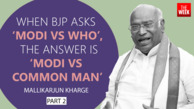
Exclusive interview with Congress President Mallikarjun Kharge | INC | Part 2 | THE WEEK
Mallikarjun Kharge is facing his toughest challenge since he became Congress president in October 2022. THE WEEK caught up with Kharge for a detailed interview where he talks about Prime Minister Narendra Modi, electoral bonds and the Ram Temple
-

Exclusive interview with Congress President Mallikarjun Kharge | INC | Part 1 | THE WEEK
THE WEEK caught up with Mallikarjun Kharge for a detailed interview where he talks about Prime Minister Narendra Modi, election guarantees, and the challenges the Congress party is encountering in the upcoming elections.
-

Interview with former IAS officer and Congress candidate Sasikanth Senthil | THE WEEK
Former IAS officer Sasikanth Senthil is all set to contest Lok Sabha polls from Tamil Nadu's Tiruvallur. THE WEEK caught up with the Congress candidate for a quick interview where he talks about his campaign and the Congress manifesto
International
- European Union official urges G7 to step up air defence for Ukraine and expand Iran sanctions
- US supports reform of UN Biden admin official on Musk's remarks on permanent UNSC seat for India
- French hero gains Australian residency for confronting killer in deadly Sydney shopping mall attack
- US envoy to the UN vows support for families of Japanese who were abducted and taken to North Korea
- India appears to be transitioning from Congress to a BJP-dominated system Ashley Tellis
Entertainment
- Vikram's 62nd movie is titled 'Veera Dheera Sooran'
- Aamir Khan deepfake video Mumbai Police register FIR against unidentified person
- I don't believe in star power Vidhu Vinod Chopra on why content matters more to him
- I was starstruck Pratik Gandhi on working with Vidya Balan on 'Do Aur Do Pyaar'
- Rasika Dugal-Arjun Mathur’s ‘Lord Curzon Ki Haveli’ to close UK Asian Film Festival
Sports
- Focus on Vinesh Phogat as Indian wrestlers begin Olympic quota hunt
- Siwach backs India men's hockey team for Paris Olympics gold
- Down with knee injury Sreeshankar ruled out of Olympics to undergo surgery
- Down with knee injury Sreeshankar ruled out of Olympics to undergo surgery
- IPL 2024 CSK ropes in Richard Gleeson as replacement for injured Devon Conway
Business
- La Excellence IAS Academy bags 39+ AIR Ranks Shaping Success Stories in UPSC 2023
- KPMG Innovation Kaleidoscope Insights Centre Inaugurated in Bengaluru
- Rupee rises 6 paise to close at 83.55 against US dollar
- Neet Launches Topical CBD Oils for Pain Relief
- Surbhi Goel to be appointed CEO Munich Re India
Tarantino had teased that The Movie Critic was based on a porno rag journalist

EDITOR'S PICK
Challenges galore as Congress fights for survival
Lack of money and fissures within the opposition are hurting the party
By Soni Mishra
'All anti-people laws by BJP will be reviewed': Chidambaram
Chidambaram is Congress's manifesto maestro
By Soni Mishra
'BJP wants to manipulate the election': K.C. Venugopal
We are living in a dark era
By K.C. Venugopal
'When BJP asks Modi vs Who, the answer is Modi vs Common Man': Mallikarjun Kharge
Kharge is facing his toughest challenge since becoming the Congress president
By Soni Mishra, Midhun M. Kuriakose and V.S. Jayaschandran/Bengaluru
Kejriwal's political voyage has come to a full circle
Will Kejriwal emerge stronger from his imprisonment, is the question
By Soni Mishra and Mohit Sharma
The OnePlus Nord CE4: Evaluating battery longevity and software seamlessness
Camera performance is generally okay, but lacks in low-light shots
By Manik K
{{gallery.albumList[0].albumTitle}}
{{item.galleryDescription}}
-
Fit Flare Keto ACV Gummies Reviews – (I've Tested) My Honest Experience!
-
Soulmate Story Reviews (Insights From Customers) Will This Digital Service Reveal Your Destined Partner?
-
Is It Safe to Buy YouTube Likes? (Warning)
-
Bitcoin Edge Review 2024: Scam or Legit Trading Platform?
-
The Road Ahead: Shaping the Future of Business in the UAE